
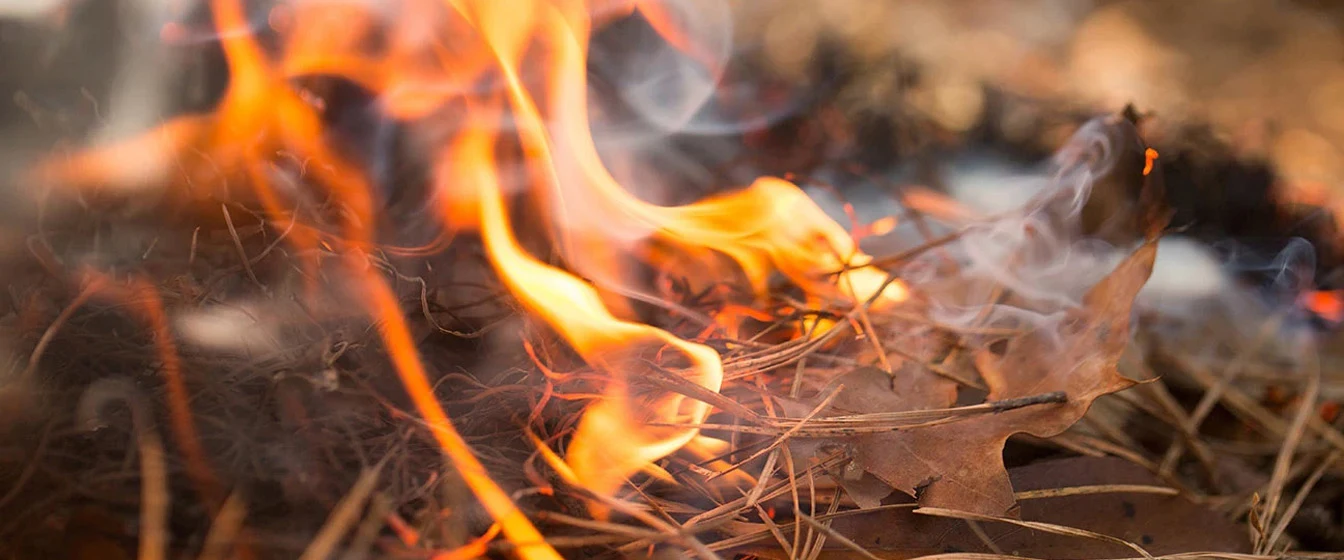
The concept of "fire season" is going up in smoke as climate change continues to cause historically dry conditions, record-setting heat waves, and harmful wind events. Wildfires are starting earlier in the year and burning for longer periods, so it is more important than ever that organizations implement a year-round strategy to protect their organizations from the risk of wildfires.
According to the National Interagency Coordination Center (NICC) Wildland Fire report, 2025 saw 77,850 wildfires, compared to 67,897 wildfires reported in 2024. These fires destroyed a total of 18,385 structures, including 12,773 residential properties, 5,116 minor structures, and 496 commercial structures.
Philadelphia Insurance Companies (PHLY) encourages policyholders to learn more about this exposure and strategies to keep people and property safe.
What to Know About Wildfires
A wildfire, also known as a forest fire, vegetation fire, grass fire, brush fire, or bushfire (in Australasia), is an uncontrolled fire often occurring in wildland areas, but which can also consume homes, agricultural resources, and businesses.
Almost nine out of 10 wildfires in the United States are caused by humans, with the main causes including burning debris, unattended campfires, and sparks thrown by vehicles or equipment.
Wildfires can attack a building in three different ways:
Most commonly, flying embers blown by the wind will ignite combustible external elements.
Fire spreads from a bush or tree to the walls of a structure.
Radiant heat from flames around a building causes the structure to catch fire.
How to Protect Property Against Wildfires
One of the most effective ways to prevent or slow wildfires from reaching your property is to create a buffer, also known as defensible space, around your building and the surrounding grass, brush, trees, shrubs, or any other woodland area.
PHLY recommends a minimum clearance of 300 feet for grass and brush fire exposure and 500 feet for forest fire exposure.
Some other important defensible space guidelines to remember:
Established roadways provide engineered features to offer a barrier and allow access for firefighting personnel, fire mitigation efforts, and evacuation.
Skylights and gutters are not favorable building characteristics as combustible debris can get trapped.
Water accessibility greatly affects the ability to fight a fire.
Use fire-resistant building or roof materials - preferred roofs are non-combustible, pre-cast, poured, concrete, slate, metal, or composite.
Other mitigation measures business owners can take to protect their properties include:
Ensure defensible space is properly maintained, especially in wildfire-prone areas
Implement "fire smart" landscaping: Place fire-resistant plants strategically around buildings, keep trees and shrubs trimmed back from properties, and replace combustible mulch within five feet of the building with rock mulch
Ask your utility company to trim trees near power lines
Check the condition of fire extinguishers within the property
Practice fire drills and emergency evacuations with employees
Be aware of the closest fire hydrant or water supply
Protecting Your Drivers and Your Fleet
Buildings are not the only elements of your organization that need to be protected. Once a wildfire has been declared near your area of operations, it's important to know if your employees and vehicles are in danger.
PHLY's telematics solution PHLYTRAC uses GPS technology to help business owners plan, manage, and respond to operational changes so they can keep drivers safe and vehicles protected. This service is provided to PHLY insureds with auto coverage at no additional cost.
Features of PHLYTRAC include:
Geofencing: The system sends an alert if a vehicle enters or leaves a set area (geofence)
Live Map Feed: See where vehicles on the system are located in real-time on a map
Landmarks: Receive an alert if a vehicle approaches a set address within a given radius
Unauthorized Usage: Set specific times vehicles are allowed to be on the road and get alerts if a vehicle is turned on outside of the authorized time
Learn More About Protecting Your Business
Business owners should work with their insurance agents to ensure they have adequate insurance coverage to protect their business and equipment in the event of a wildfire. They can also contact the PHLY Risk Management Services team at PHLYRMS@phly.com to find out more about PHLY's risk management resources.
Additional Resources
The Wildland Fire Assessment System helps assess your risk of brush/wildfires.
The National Fire Protection Association offers various resources to help reduce the danger of brush and wildfire damage to structures.
ReadyforWildfire.org can help you create a wildfire action plan and emergency supply kit.
The Insurance Institute for Business & Home Safety has many tips to help businesses get wildfire ready and provides important wildfire evacuation information.